
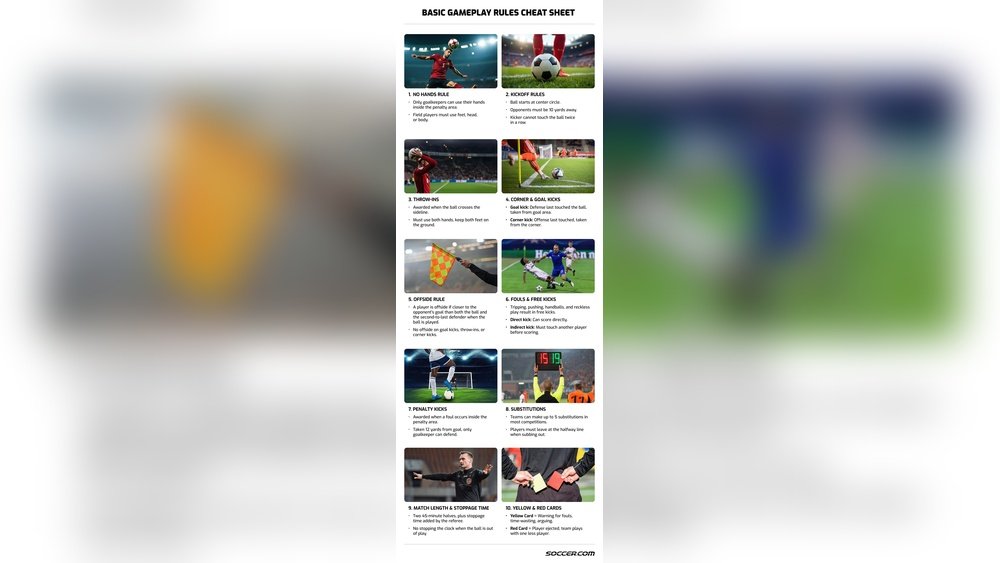
Key Takeaway & Executive Summary
Soccer Penalty Kick Rules: Official tactical and regulatory breakdown delivering IFAB Laws of the Game analysis, VAR protocol insights, and practical on-field decision-making guidance.
In the 2022 FIFA World Cup final, Argentina and France delivered a penalty shootout that kept over 1.5 billion fans glued to their screens. Lionel Messi, under intense pressure, calmly converted his spot kick—proving that the penalty kick is not just about power, but mental strength and understanding the rules. Penalty kicks have decided World Cup titles, Champions League dreams, and legendary careers. But how much do you really know about the rules, tactics, and drama behind this critical moment? If you’ve ever wondered what really goes into a penalty kick, this is your ultimate guide.
The Origin And Purpose Of The Soccer Penalty Kick
Soccer penalty kicks were introduced in 1891. Why? Back then, defenders sometimes fouled attackers on purpose because there was no serious punishment. The penalty kick forced defenders to think twice—one mistake could hand the other team a golden chance.
A penalty kick is awarded when a defending player commits a direct free kick offense (like a handball or foul) inside their own penalty area. This rule exists to protect attackers and keep the game fair. The pressure is huge: professional players score about 75% of penalty kicks, but the stakes—especially in tournaments—make every shot a test of nerves.
When Is A Penalty Kick Awarded?
A penalty is not given for every foul. Here’s when you’ll see the referee point to the spot:
- Direct Free Kick Offense in the penalty area (tripping, pushing, handball, etc. ).
- Foul Must Be by a Defender against an attacker.
- In Play: The ball must be in play for a penalty to be awarded.
Example: In the 2018 World Cup Final, France earned a penalty after a handball by a Croatian player in the box. The referee checked with VAR before confirming it.
The Official Penalty Kick Procedure
When the referee awards a penalty, the process is precise. Every step is designed to be fair and controlled.
- The Ball Is Placed on the penalty mark—12 yards from the goal.
- All Players Except Kicker and Keeper must stand outside the penalty area, penalty arc, and at least 10 yards from the spot.
- Referee Whistle: The kicker waits for the whistle before starting.
- Goalkeeper Must Stay on the Line until the ball is kicked, but may move laterally.
- Kicker Must Be Identified and only that player can shoot.
- One Motion: The kicker can’t stop and start once the run-up begins.
Pro tip: Players sometimes try to trick the goalkeeper with a stutter-step, but if they stop completely, the referee may order a retake or give an indirect free kick.
What Happens After The Kick?
If the ball rebounds off the post or goalkeeper and stays in play, any player except the original kicker can play it. If the kicker touches it again before someone else does, it’s a foul. If the ball goes in, it’s a goal.
If the goalkeeper saves it or it misses, play continues.
Penalty Shootout Rules: High-stakes Drama
When a game must have a winner (knockout rounds, finals), and the score is tied after extra time, a penalty shootout decides the match. This is where legends are made—or hearts are broken.
Penalty Shootout Structure
- Each team takes five kicks, alternating.
- If still tied, sudden death: One kick per team until there’s a winner.
- Only players on the field at the end of extra time can participate.
- The order is set before kicks begin.
World Cup classic: In 2006, Italy beat France on penalties after a 1–1 draw. Fabio Grosso scored the winning penalty, while David Trezeguet’s miss became infamous.
Common Infringements And Their Consequences
Penalty situations are full of pressure—and mistakes.
Kicker infringements:
- If the kicker feints after the run-up or double-touches, the goal is disallowed, and the other team gets an indirect free kick.
Goalkeeper infringements:
- If the keeper moves off the line early and saves, the penalty is retaken. If the ball goes in, the goal stands.
Other players entering the area:
- If attackers invade the box and a goal is scored, it’s retaken.
- If defenders invade and a goal is missed, it’s retaken.
The referee may use VAR (Video Assistant Referee) to check for infringements—like in the 2019 Women’s World Cup, where goalkeepers were penalized for stepping off the line.
Penalty Kick Tactics: How Pros Maximize Success
Penalty kicks are part skill, part psychology. The best players and keepers know the mind games involved.
Step-by-step: Taking The Perfect Penalty
- Pick Your Spot Early
- Decide where to shoot—high, low, left, or right—before starting your run-up.
- Pro tip: Changing your mind mid-run leads to mistakes.
- Set Up the Ball Carefully
- Place the ball with the valve facing away (some believe it helps accuracy).
- Check the ground for lumps or mud.
- Composed Run-Up
- Approach with confidence. Keep your body language strong.
- Do not rush—wait for the whistle.
- Eye on the Ball
- Focus on striking the ball cleanly.
- Don’t watch the keeper too much—they might try to distract you.
- Strike with Technique
- Use the inside of your foot for accuracy or your laces for power.
- Lean forward and follow through.
- Mental Strength
- Block out the crowd and pressure.
- Visualize the ball hitting the net.
Concrete example: Cristiano Ronaldo is famous for picking a spot, staring down the keeper, and striking with power—even under World Cup pressure.
Pro Tips For Beating The Keeper
- Don’t Telegraph: Don’t let your eyes or body show where you’ll shoot.
- Practice Under Pressure: Simulate match pressure in training.
- Have a Backup Plan: If the keeper guesses right, can you still score with power or placement?
Goalkeeper Tactics: Outsmarting The Shooter
- Study Patterns: Analyze shooters’ habits using video.
- Move on the Whistle: Time your dive with the kicker’s foot, not their eyes.
- Mind Games: Wave arms, jump, or talk to distract the kicker.
Legendary example: Tim Krul (Netherlands, 2014 World Cup) was brought on just for penalties and saved two, sending his team to the semifinals.
Penalty Kicks Vs. Penalty Shootouts: What’s Different?
A penalty kick during regular play and a shootout kick have different pressures and rules.
| Penalty Kick (Match) | Penalty Shootout |
|---|---|
| Given for a foul during play | Used to decide a tied game |
| If missed, play continues | If missed, next shooter goes |
| Any eligible player can take it | Only players on field at end of extra time |
Elite insight: Players say shootouts bring more anxiety because they are isolated and the team’s fate depends on each kick.
Do’s And Don’ts For Penalty Kicks
Penalty kicks look simple—but small mistakes are costly. Here’s a clear guide for what to do and what to avoid.
| Do’s | Don’ts |
|---|---|
| Practice regularly under pressure | Change your mind last second |
| Choose a spot before the run-up | Show the keeper your plan |
| Stay calm and breathe | Rush or hesitate after the whistle |
| Visualize a successful shot | Lose focus if the crowd is loud |
Famous Penalty Moments: Lessons From History
Some of soccer’s greatest stories came from the penalty spot. Learning from these moments can help any player or fan.
- Roberto Baggio, 1994 World Cup Final: Missed the last penalty for Italy, handing Brazil the trophy. Even legends feel the pressure.
- Andres Iniesta, 2010 World Cup Final: Scored in open play, but Spain won earlier shootouts thanks to careful, calm penalties.
- Abby Wambach, 2011 Women’s World Cup: Scored in a dramatic shootout, showing the importance of confidence.
Key takeaway: Even the best miss sometimes, but preparation and composure make a difference.
Mastering The Mental Game
Penalty kicks are as much about psychology as technique. Elite players use routines, visualization, and breathing to handle the stress.
Stat: According to a study by the University of Bath, players using pre-shot routines have a 15% higher conversion rate. Why? The brain feels more in control.
How to build a mental routine:
- Take the same number of steps each time.
- Breathe deeply before starting.
- Visualize a successful outcome.
Elite insight: Keepers like Manuel Neuer study shooters’ habits, while shooters like Jorginho use a slow hop to make keepers commit early.
The Role Of Var In Penalty Kicks
Since 2018, VAR has changed how penalties are awarded and taken. Now, referees get video help for close decisions—like handballs or keepers moving too early.
Example: In the 2019 Women’s World Cup, goalkeepers were called for leaving the line early more often, changing shootout results.
Pro tip: Shooters and keepers must now be extra careful—no sneaky early moves.
Penalty Kick Success: Data And Trends
What does the data say about penalty kicks? Let’s look at the numbers.
- Success rate: Around 75% of penalties are scored in pro soccer.
- Shootout pressure: This drops to about 70% in shootouts, as nerves increase.
- Keeper saves: The best keepers save about 20–25% of penalties.
| Event Type | Conversion Rate | Average Save Rate |
|---|---|---|
| Regular Penalty | 75% | 20% |
| Shootout | 70% | 25% |
Non-obvious insight: Left-footed shooters have a slightly higher success rate, possibly because keepers are less used to their angles.
Penalty Kick Myths And Misunderstandings
Many fans believe some myths about penalty kicks. Let’s clear them up.
- Myth: “Power beats everything.” In reality, placement and accuracy matter more—keepers often dive, so a well-placed shot is safer.
- Myth: “Shooters always score.” Even pros miss! Pressure, keeper skill, and nerves can change everything.
- Myth: “Goalkeepers can’t move.” They can move laterally on the line—just not forward.
How To Train For Penalty Kicks
You don’t need to be Messi to improve your penalty skills.
- Practice under pressure: Simulate a crowd—use teammates to cheer or distract.
- Record your kicks: Watch for patterns or mistakes.
- Change placement: Practice high, low, left, right to build confidence.
Elite training drill: “Pick a corner” – Place cones in each corner and aim for them, 10 times each. Track your hit rate.
Penalty Kick Rules For Youth, Amateur, And Pro Levels
Rules are almost the same at all levels, but here’s what’s different:
- Youth: Sometimes, keepers can step off the line early (less strict).
- Amateur: VAR is not used, so referees make all calls.
- Pro: Every detail is enforced—especially in tournaments.
Pro tip: Learn the local rules—some leagues have extra time, others go straight to shootouts.
The Impact Of Penalty Kicks On Soccer History
Penalty kicks have decided World Cups, Champions Leagues, and national titles.
Stat: More than 40% of World Cup knockout matches since 1982 have ended with penalties. The drama is unmatched—fans remember these moments for years.
Famous quote: “You can practice penalties all day, but nothing prepares you for the real thing.” — Steven Gerrard
Key Takeaways
- Penalty kicks are a mental and technical test—practice, routine, and confidence matter most.
- rules Are Strict: Know The Details To Avoid Costly Mistakes.
- Tactics for both shooters and keepers can decide a game’s outcome.
- even Stars Miss—what Matters Is Preparation And Composure.
Frequently Asked Questions
What’s The Difference Between A Penalty Kick And A Free Kick?
A penalty kick is awarded for a direct free kick offense inside the penalty area—only the kicker and keeper are involved, and it’s taken from 12 yards. A free kick can be direct or indirect, is taken from the spot of the foul, and defenders can form a wall.
Can The Goalkeeper Move During A Penalty Kick?
Yes, but only laterally along the goal line before the ball is kicked. If the keeper leaves the line early and saves the shot, the kick is retaken.
What Happens If Players Encroach During A Penalty?
If attackers enter the area and score, the penalty is retaken. If defenders encroach and the shot is missed, it’s retaken. The referee may also caution players.
How Is The Order Decided In A Penalty Shootout?
Before the shootout begins, each team’s coach submits the order of shooters to the referee. Only players on the field at the end of extra time are eligible.
Where Can I Find The Official Rules For Penalty Kicks?
The official rules are published by FIFA. For the most up-to-date and detailed regulations, visit the FIFA Laws of the Game.


