Key Takeaway & Executive Summary
How To Improve Soccer Skills: Comprehensive training guide delivering actionable drill progressions, verified repetition intervals, and evidence-backed skill acquisition tips for competitive players and coaches.
Every World Cup, we see brilliance: Kylian Mbappé clocked 35km/h sprint speed in 2022, and Lionel Messi’s first touch is legendary. But most players never reach this level. Why? It’s not just talent—it’s daily practice and smart habits. If you want to improve your soccer skills, you need drills and routines that actually work, not just theory. Let’s break down the 10 drills and habits that transform average players into standouts, with pro-level tips and actionable steps.
1. First Touch Mastery
A great first touch keeps the ball close and under control. In top leagues, players complete over 90% of their touches cleanly. To sharpen this skill:
- Wall pass drill: Use a wall or rebounder. Pass the ball, control it with one touch, then pass again. Repeat for 10 minutes daily.
- Focus on both feet to avoid a weak side.
- Mix up power and angles for realism.
Pro tip: Watch how Messi traps passes with a soft foot. If you can cushion the ball like that, defenders struggle to steal it.
Many beginners don’t realize that even a slightly poor first touch forces you to look down at the ball, so you miss what’s happening around you. Great players always keep their head up after the first touch. Try varying the surface you use—sometimes use the inside of the foot, other times the outside or sole.
Each adds a new layer of control. If you find the ball bounces too far away, slow down and focus on absorbing the pass gently.
| Drill | Difficulty | Improvement Rate |
|---|---|---|
| Wall Pass | Easy | High (2-3 weeks) |
| Partner Passing | Medium | Moderate (4 weeks) |
2. Dribbling Under Pressure
Dribbling isn’t just about speed—it’s control in tight spaces. Data from FIFA shows average elite dribbler success rates: 68%. To boost yours:
- Cone maze drill: Set up cones 1 meter apart. Dribble through, keeping the ball close.
- Add defenders or obstacles for realism.
- Use inside, outside, and sole of your foot.
Pro tip: Try the “Messi dribble”—short, quick touches with low center of gravity. It’s harder for defenders to intercept.
If you struggle when defenders get close, practice keeping your head up while dribbling—this helps you spot gaps and avoid tackles. Change direction quickly. Don’t always go in straight lines; zigzag, double back, and use feints. A small hop or body fake can make a huge difference.
Set a timer and see how many times you can complete the maze in one minute. Track your best score and try to improve each week.
One non-obvious tip: Practice with both feet, even if it feels awkward. In games, defenders force you onto your weak side. If you can escape pressure with either foot, you become unpredictable.
3. Shooting With Both Feet
Being predictable makes scoring tough. In the Premier League, top strikers score with their weaker foot 27% of the time. Improve yours:
- Alternate foot shooting: Take 20 shots with your strong foot, 20 with your weak. Focus on accuracy first, then power.
- Use targets in the goal for aiming.
- Challenge yourself: One-touch, volleys, and on-the-move shots.
Pro tip: Watch videos of Cristiano Ronaldo—he practices left-foot shots every session, though he’s right-footed.
Most players ignore their weak foot during practice, but games are unpredictable. If the ball falls to your weak side, you need confidence to shoot without hesitation. An easy way to practice: Put down cones as targets and aim for them. Reward yourself for hitting them. Start close to goal, then move back as you improve. If your weak foot feels hopeless, practice just the motion—no power, only technique—until it feels smoother. Over time, you’ll trust it more.
Try varying the ball’s speed and position—sometimes shoot after a dribble, sometimes from a pass. This simulates real match moments, where you rarely get a perfect setup.
4. Passing Accuracy And Vision
Great teams—like Manchester City—complete over 89% of passes. You can boost your passing:
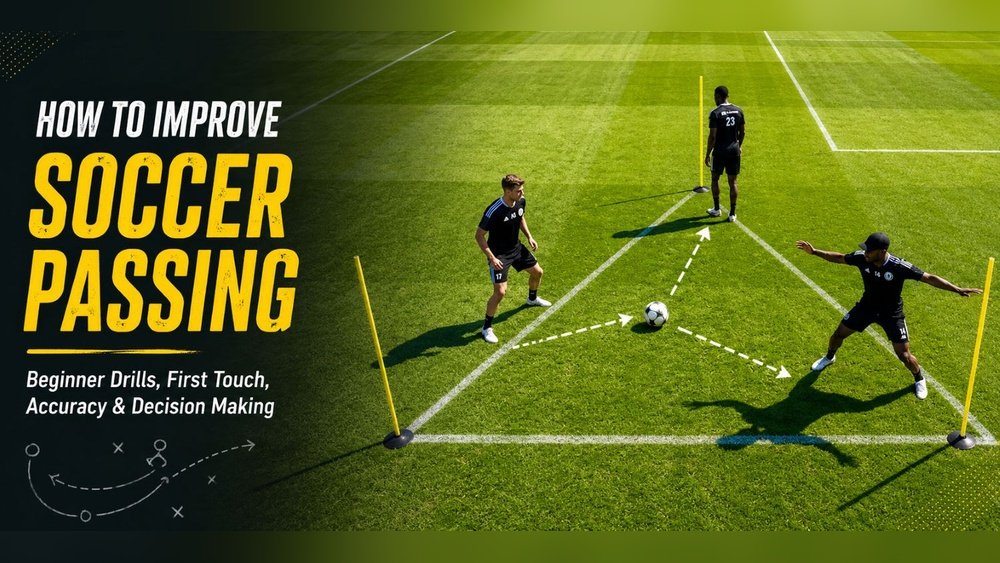
- Triangle passing drill: Set up cones in a triangle. Pass and move around, always checking your surroundings.
- Practice lofted and ground passes.
- Use both feet and vary speed.
Non-obvious insight: Scan the field before receiving the ball. Most beginners only look after they’ve got it.
Passing isn’t just about hitting the ball straight. Try passing with different parts of the foot—inside for short passes, laces for long ones, and outside for creative plays. Always check your shoulder (look around) before the ball reaches you. This lets you know if you can turn or need to pass quickly.
Add a friend or coach who shouts instructions—like “turn” or “pass back”—to make it more game-like.
A common mistake is passing blindly. Always have a target in mind. Even when practicing alone, imagine a real teammate’s position.
| Type of Pass | Success Rate (Amateurs) | Success Rate (Pros) |
|---|---|---|
| Short Pass | 72% | 94% |
| Long Pass | 51% | 79% |
5. Defensive Positioning
Many players chase the ball, but elite defenders—like Virgil van Dijk—predict play. To improve:
- Shadow marking drill: Practice moving with a partner, keeping between them and the goal.
- Focus on keeping your body sideways, not flat.
- Anticipate passes, don’t react late.
Pro tip: Watch pro defenders’ feet—they rarely cross over, which keeps them balanced.
Good defenders always position themselves to see both the ball and their opponent. When you’re marking, stay on your toes—ready to move in any direction. Beginners often panic and stab at the ball; instead, be patient and wait for the attacker to make a mistake.
Practice “jockeying”—moving backwards while facing the attacker. This delays their attack and lets your team recover.
If you want to test yourself, ask a teammate to try to dribble past you in a small space. Focus on staying low and adjusting your distance, not lunging in. Over time, you’ll feel more comfortable under pressure.
6. Quick Decision Making
Soccer is fast. On average, players have less than 2 seconds to decide what to do. To sharpen your choices:
- Small-sided games: Play 3v3 or 4v4. Fewer players mean more touches and quick decisions.
- Limit touches (e.g., two-touch only).
- Use a timer for drills.
Non-obvious insight: Record your games. Review your decisions—what options did you miss?
Quick decisions come from preparation. Before you receive the ball, already know your options. In small-sided games, there’s less time and space—this forces your brain to work faster. If you struggle, try saying your decision out loud before you get the ball.
It sounds strange, but it builds the habit.
Watch highlights of pro players, and pause before each play. Ask yourself, “What would I do? ” Then see what the pro did. This teaches you to see the game like a pro.
7. Conditioning And Agility
Top players cover over 10km per match. Without agility and stamina, your skills fade late in games.
- Ladder drill: Use an agility ladder. Step quickly through patterns for 5 minutes.
- Sprint intervals: 20 seconds sprint, 40 seconds jog, repeat 10 times.
- Mix in jump training for explosive movements.
Pro tip: Don’t ignore recovery—stretch and hydrate to avoid injuries.
Many beginners focus only on ball skills, but soccer is physical. If you tire easily, your decision-making and technique will suffer. Do ladder drills sideways and backwards too, not just forward. This builds coordination. Sprint intervals mimic the way soccer is played—short bursts, not steady jogging.
After drills, spend 5–10 minutes stretching major muscle groups. Proper recovery cuts injury risk and makes you feel fresher next session. If you want an extra edge, add core exercises like planks and side planks. Strong core helps with balance and shooting power.
8. Game Awareness
Soccer IQ is vital. Knowing where teammates and opponents are improves every skill.
- Visualization habit: Before games, picture the field. Imagine where you’ll be, what you’ll do.
- Watch pro matches and focus on off-ball movement.
- Ask coaches for feedback about your positioning.
Non-obvious insight: Pro players talk constantly on the field. Communication boosts awareness.
Try this: At practice, call out a teammate’s name before you pass. This builds the habit of scanning and talking. Off the field, close your eyes and imagine different game scenarios—like defending a corner or counter-attacking. These mental reps make real games feel familiar.
Ask your coach or a more experienced player to point out moments you’re out of position. Don’t take it personally; this feedback is gold. Over time, you’ll start to anticipate danger and opportunities.
9. Mental Toughness
Even Messi misses penalties. What separates pros is the ability to bounce back. Build mental strength:
- Pressure shootout drill: Take 5 penalties after running sprints. Simulates tiredness and pressure.
- Practice breathing techniques.
- Set mini goals (e.g., “win every 50/50 ball”).
Pro tip: Write down mistakes after games, then write how you’ll fix them.
Tough games and mistakes are part of every player’s story. If you miss a shot or lose the ball, don’t hide. Ask yourself, “What can I do better next time? ” Celebrate small wins—like a good tackle or smart pass—even if your team loses.
Try a simple breathing routine before games: Inhale for 4 seconds, hold for 4, exhale for 4. This keeps nerves under control. Remember, confidence is built by facing challenges, not avoiding them.
10. Consistent Practice Routine
Talent fades without repetition. A study found players practicing 5 days a week improved 40% faster than those training only twice.
- Weekly plan: Schedule drills for each skill. Track progress in a journal.
- Mix solo and group practice.
- Rest at least one day per week.
Pro tip: Don’t skip weak areas. Most players avoid what’s hard, but improvement is fastest there.
Vary your drills each week. If you always do the same routine, your body and mind stop adapting. Add fun—like trick shot challenges or competitive mini-games. If you’re tired, focus on technique instead of speed or power.
Write down your goals—like “improve weak foot” or “complete 10 passes in a row. ” At the end of each week, check if you met your goals. If not, adjust for next week. Consistency beats intensity; it’s better to practice a little every day than a lot one day then nothing for three.
| Practice Frequency | Skill Growth Rate | Common Mistake |
|---|---|---|
| 2 days/week | Slow (15%) | Skipping weak skills |
| 5 days/week | Fast (40%) | Overtraining, no rest |
Pro Tips: Do’s And Don’ts For Each Drill
Here’s a quick reference for what works—and what doesn’t.
| Skill | Do | Don’t |
|---|---|---|
| First Touch | Practice both feet, soft control | Ignore weak foot |
| Dribbling | Keep ball close, vary speed | Dribble too wide |
| Passing | Scan before passing | Pass blindly |
| Shooting | Use both feet | Only strong foot |
| Defending | Stay balanced, anticipate | Cross feet, chase |
| Decision Making | Play small games, review video | Overthink, freeze |
Actionable Takeaways
- Practice daily—short sessions are better than rare, long ones.
- Film yourself—most improvement comes from seeing mistakes.
- Track progress—set clear goals and review weekly.
- Mix drills—don’t repeat the same routine every day.
- Rest is vital—burnout ruins progress.
Smart players set aside time for feedback. Ask teammates or coaches for honest advice. If you’re stuck, change your approach—sometimes a small tweak can break a plateau. Remember, improvement is not always fast or obvious, but steady effort compounds over time.
Want more tips from pro coaches and data? Check out FIFA Technical Resources for advanced drills and real match analysis.
Frequently Asked Questions
How Often Should I Practice To See Real Improvement?
Aim for 5 days a week, with sessions between 30–60 minutes. Consistency matters more than length. Include rest days to avoid injury and burnout.
What’s The Best Drill For Weak Foot Improvement?
Alternate foot shooting is most effective. Take 20–30 shots per session with your weak foot. Start slow, focus on accuracy, then add power.
How Can I Improve Soccer Iq And Game Awareness?
Watch professional matches, especially off-ball movement. Use visualization before games—picture situations and your responses. Communicate with teammates during play.
Is Agility Training Necessary For All Positions?
Yes. Agility and conditioning help defenders, midfielders, and attackers. Use ladder drills and sprints for fast footwork and stamina.
What’s A Common Mistake Beginners Make During Practice?
Many players skip their weak skills or avoid pressure drills. Improvement happens faster when you challenge yourself, not when you stay comfortable.