Key Takeaway & Executive Summary
Advanced Soccer Training Drills: Comprehensive training guide delivering actionable drill progressions, verified repetition intervals, and evidence-backed skill acquisition tips for competitive players and coaches.
Soccer is a game of skill, strategy, and relentless effort. Improving your game goes beyond showing up for practice or casually kicking the ball around. Advanced soccer training pushes you to refine your skills, sharpen your mind, and prepare your body for the demands of high-level competition.
I remember when I first started taking soccer seriously. Advanced soccer training felt like something only professionals did. I thought it was out of reach. I just played for fun. But the day I missed a wide-open teammate in a crucial match taught me a hard lesson. Playing well requires deliberate practice, and advanced training is the key to unlocking your potential.
Here, we break down the essential components of advanced soccer training, from technical drills to tactical awareness and physical conditioning. Let’s break down the skills and strategies that can elevate your game to the next level.
First Touch Mastery: The Foundation of Advanced Soccer Training
First touch determines your next move. A great first touch creates opportunities, while a poor one loses possession. Advanced players don’t just stop the ball—they control it, direct it, and use it to set up their next action.I used to trap the ball without much thought. My coach pointed out I was wasting time and losing space. That feedback changed how I approached training. I started practicing first-touch drills that emphasized precision and adaptability.
Practical Drill Tip for First Touch
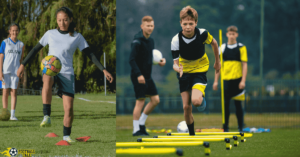
- Practice receiving the ball with different parts of your foot—inside, outside, and sole.
- Work on redirecting the ball into open space with your first touch.
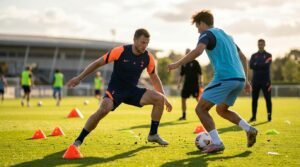
- Add pressure by having a teammate or coach close in on you as the ball arrives.
A great first touch can buy you time, create space, and dictate the tempo of the game. Don’t just trap the ball. Control it. Own it.
Passing Precision: The Core of Advanced Soccer Drills
Passing is one of the simplest yet most critical skills in soccer. At an advanced level, passing drills focus on accuracy, weight, and timing—all of which can make the difference between a successful attack and a turnover.I’ll never forget the time I misplaced a simple pass during a game. It led to a counterattack, and we conceded a goal. That mistake stuck with me. It motivated me to work on my passing with purpose.
Practical Drill Tip for Passing
- Use both feet to practice short, crisp passes and long, driven balls.
- Pair up with a teammate and aim for specific targets, like cones or small goals.
- Practice one-touch passing to improve speed and decision-making.
Advanced passing drills challenge you to think ahead, communicate clearly, and execute with precision. Train like you play—every pass matters.
Dribbling Dynamics: Advanced Soccer Training for Ball Control
Dribbling isn’t about flashy moves. It’s about control, balance, and adaptability. Advanced dribbling drills focus on keeping the ball close, shielding it from opponents, and changing direction quickly.I used to overcomplicate my dribbling, trying too many tricks and losing possession. A coach once told me, “Keep it simple, but effective.” That advice changed everything.
Practical Drill Tip for Dribbling
- Set up cones in a zigzag pattern and practice dribbling through them with both feet.
- Focus on small touches and keeping your head up to scan the field.
- Add defenders to simulate game pressure and practice shielding the ball.
Stay unpredictable. Use changes in pace and direction to keep defenders guessing. Dribbling well is about control, not just flair.
Finishing Finesse: Advanced Shooting Drills for Accuracy and Power
Shooting is one of the most exciting aspects of soccer, but it’s also one of the most technical. Advanced shooting drills focus on placement, timing, and composure under pressure.I used to blast the ball every time I got a chance to shoot. Rarely scored. Then I started focusing on placement instead of just power. My accuracy improved dramatically.
Practical Drill Tip for Shooting
- Practice different types of shots: power shots, finesse shots, volleys, and one-touch finishes.
- Simulate game scenarios by shooting under pressure from a defender or goalkeeper.
- Focus on striking the ball cleanly and aiming for specific corners or areas of the goal.
Scoring goals is about making the most of every opportunity. Train for precision, and the goals will come.
Advanced Soccer Training for Speed and Agility
Speed and agility are essential in soccer. The ability to burst past a defender or recover quickly after a missed tackle can change the outcome of a match. Advanced drills focus on quick feet, explosive movements, and sharp changes of direction.I remember a game where I got burned on the wing because I wasn’t fast enough to keep up. That moment motivated me to incorporate speed and agility drills into my training.
Practical Drill Tip for Speed and Agility
- Use cone drills and ladder drills to improve footwork and acceleration.
- Practice shuttle runs to develop short bursts of speed.
- Incorporate plyometric exercises like box jumps to build explosive power.
Quick reactions and sharp movements make you a dynamic player. Train your body to react instinctively.
Tactical Awareness: Training for Soccer Intelligence
Tactics separate good players from great ones. Knowing your role, understanding formations, and reading the game are all part of advanced soccer training. Tactical awareness drills help players anticipate plays, make smarter decisions, and execute strategies effectively.I once missed a wide-open teammate in a match because I wasn’t aware of my surroundings. That mistake taught me the importance of tactical training.
Practical Drill Tip for Tactical Awareness
- Play small-sided games to practice positioning, decision-making, and teamwork.
- Study game footage to analyze player movements and team strategies.
- Work on position-specific drills to better understand your role on the field.
Tactical awareness is about thinking ahead and staying one step ahead of your opponents.
Strength and Conditioning for Advanced Soccer Training
Physical fitness is the foundation of soccer performance. Strength, power, and endurance are essential for competing at an advanced level. A strong, well-conditioned body can handle the demands of high-intensity matches and recover quickly.I used to cramp up late in games, which affected my performance. Adding strength and conditioning exercises to my routine made a huge difference.
Practical Drill Tip for Strength and Conditioning
- Focus on compound exercises like squats, deadlifts, and lunges to build lower-body strength.
- Incorporate plyometric exercises to improve explosiveness.
- Run intervals to build cardiovascular endurance.
Fuel your body with proper nutrition and prioritize recovery. A well-conditioned body supports consistent performance.
Mental Fortitude: The Psychology of Advanced Soccer Training
Soccer is as much a mental game as it is physical. Confidence, focus, and resilience are essential for handling high-pressure situations. Advanced training includes mental exercises to build mental toughness.I’ll never forget the penalty kick I missed during a crucial game. Nerves got the best of me. Mental training taught me how to stay calm and composed.
Practical Drill Tip for Mental Training
- Visualize successful plays before matches to build confidence.
- Practice under pressure by simulating high-stakes scenarios during training.
- Develop pre-game routines to manage stress and stay focused.
A strong mindset can push you through challenges and elevate your performance.
Combining Advanced Soccer Training with Resources
There’s no shortage of resources to help you improve. Online platforms, coaching programs, and training videos offer valuable tools to accelerate your development. I’ve used several over the years, and they’ve all contributed to my growth as a player.Find a program or resource that aligns with your goals. Stay consistent, and put in the effort. The results will follow.
Conclusion: Embracing the Challenge of Advanced Soccer Training
Advanced soccer training isn’t about shortcuts or gimmicks. It’s about dedication, deliberate practice, and a relentless desire to improve. Technical skills, tactical awareness, physical fitness, and mental toughness all come together to create a complete player.
Every drill, every sprint, every mistake is part of the process. Embrace the challenge. Celebrate the progress. Advanced training transforms potential into performance. Lace up your boots, hit the field, and put in the work. The game rewards those who stay committed.
FAQs on Advanced Soccer Training Drills
What are advanced soccer training drills?
Advanced soccer training drills are high-level exercises designed to refine technical skills, improve tactical awareness, and enhance physical and mental strength. These drills simulate real-game scenarios and challenge players to perform under pressure, making them ideal for elite-level performance.
Why are advanced soccer drills important?
Advanced drills sharpen technical abilities, improve decision-making, and prepare players for the speed and intensity of competitive soccer matches. They help players stay adaptable and confident in high-pressure situations while minimizing mistakes.
What are the best advanced soccer drills for improving speed and agility?
Use ladder drills, cone sprints, and shuttle runs to boost speed and agility. Focus on quick bursts of movement and sharp changes in direction. For instance, Bayern Munich players train with 5-10-5 shuttle runs to improve agility and reaction time.
How often should I do advanced soccer training drills?
Train 3–4 times a week, balancing skill-specific drills, strength training, and recovery. Over 70% of professional players follow a similar schedule for optimal performance (Journal of Sports Science).
What equipment is essential for pro-level soccer drills?
Cones, agility ladders, resistance bands, and a weighted ball are essential tools. Elite academies like La Masia focus on minimal equipment to emphasize technique and precision over gimmicks.
Can advanced drills help prevent injuries during matches?
Yes. Incorporating injury prevention exercises like single-leg balance drills and eccentric hamstring curls can reduce the risk of injuries by up to 35%, according to the British Journal of Sports Medicine. These exercises strengthen key areas and improve stability under physical stress.
How do pro players train differently than amateurs?
Professional players focus on position-specific drills, video analysis, and high-intensity interval training (HIIT). For example, wingers practice crossing under fatigue in 1v1 situations, while midfielders emphasize passing accuracy and tactical positioning. Training is tailored to their roles.
Are advanced drills suitable for youth players?
Yes, but intensity must be adjusted. Youth players should focus on technical skills like passing accuracy, ball control, and first touch rather than heavy conditioning. Age-appropriate progressions, as recommended by the U.S. Soccer Federation, ensure safe and effective development.
What’s the role of nutrition in advanced soccer training?
Nutrition plays a key role in performance and recovery. Carbohydrates like rice and oats fuel energy before training, while protein sources like chicken and legumes aid muscle repair afterward. Proper hydration is critical—losing just 2% of body weight in sweat can lead to a 10% drop in speed and endurance.
How long does it take to see results from advanced drills?
Consistent training yields noticeable improvements in 6–8 weeks. Top players like Mohamed Salah train daily, focusing on incremental gains. Regular practice and evaluation ensure steady progress.
What mental skills complement advanced soccer training?
Mental training is crucial for elite performance. Techniques like visualization, mindfulness, and decision-making simulations improve focus and reactions. Teams like Liverpool FC incorporate cognitive drills to enhance in-game decision-making and composure under pressure.
What are the best advanced soccer drills for ball control?
Drills like dribbling through cones, shielding under pressure, and small-sided games are excellent for ball control. Focus on close touches, quick direction changes, and maintaining possession in tight spaces.
How can I improve my passing accuracy in soccer?
Practice triangle passing drills, one-touch passing, and long-distance driven balls. Use both feet and aim for specific targets like cones or small goals. Consistent drills help improve timing, weight, and accuracy of passes.
What drills help with advanced shooting techniques?
Work on a variety of shots, including volleys, one-touch finishes, and finesse shots. Simulate game situations by shooting under pressure or adding defenders. Practice placement and composure alongside power.
Can I do advanced training without a coach?
Yes, advanced training is possible without a coach. Use tools like TacticalPad or other training apps for drill ideas. Record yourself during sessions to review and critique your form and technique.
How can I train for speed and agility in soccer?
Incorporate cone drills, ladder drills, shuttle runs, and plyometric exercises. Focus on explosive sprints, quick changes in direction, and building reaction time. Consistent speed and agility work translates directly to better on-field performance.
What strength exercises are best for soccer players?
Strength training builds a solid foundation for soccer performance. Exercises like squats, deadlifts, lunges, and planks improve lower-body strength and core stability. Plyometric exercises, such as box jumps, enhance explosive power needed for sprints and jumps.
Why is recovery critical in advanced soccer training?
Recovery allows the body to repair and adapt after intense training. Stretching, foam rolling, and proper nutrition speed up recovery and reduce the risk of overuse injuries. Recovery days are just as important as training days for maintaining peak performance.
Frequently Asked Questions
What age group or skill level is this soccer training drill best suited for?
These exercises are scalable from youth academy players (U8–U14) up to competitive adult amateurs by adjusting grid dimensions, touch restrictions, and defender pressure.
How often should players incorporate Advanced Soccer Training Drills into their weekly schedule?
Incorporate these drills 2 to 3 times per week in 20-to-30-minute high-repetition blocks to build muscle memory and sharpen spatial awareness without inducing muscular fatigue.