
Key Takeaway & Executive Summary
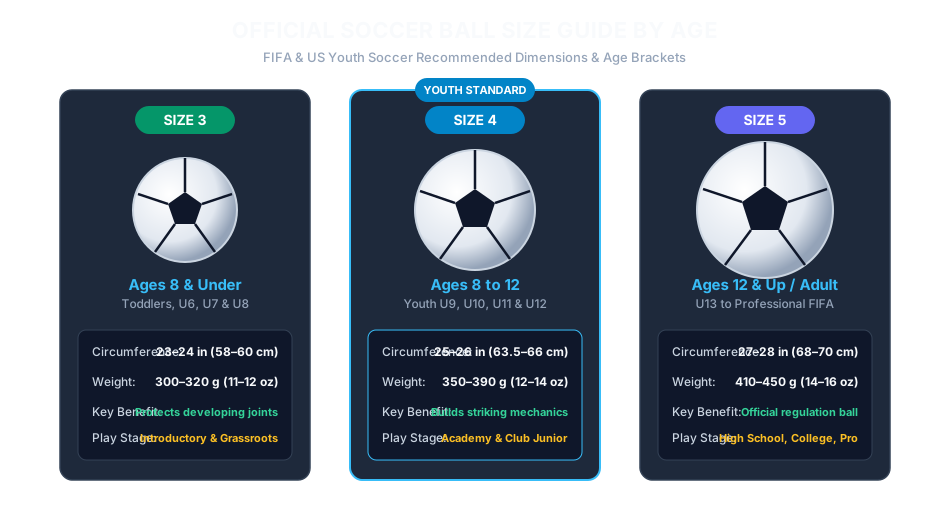
Soccer Ball Size By Age: Choosing the correct soccer ball size (Size 3 for under 8, Size 4 for ages 8-12, Size 5 for ages 12+) is essential for proper technical development, muscle adaptation, and joint safety.
Soccer Ball Size By Age: The Complete Parent Chart
The right soccer ball can change a child’s game. In the 2018 FIFA World Cup, over 3. 5 billion people tuned in, but few noticed the size of the ball each age group plays with. Cristiano Ronaldo once said, “If you don’t start with the basics, you’ll never reach the top.
” For parents, knowing the correct soccer ball size is one of those basics. Choosing the wrong size can hold back skills, cause injuries, and even make kids lose interest. This guide breaks down everything you need to know, from age-by-age ball sizes to pro-level advice and common mistakes.
Get ready to help your child play safer, smarter, and more confidently—no guesswork required.
Why Soccer Ball Size Matters
A soccer ball isn’t just a piece of equipment—it’s a training tool. Ball size affects how easily kids can kick, dribble, and control the ball. Using a ball that’s too big or too small changes the way a child learns. It’s not just about comfort; it’s about safety and skill growth.
Smaller balls help younger kids develop foot-eye coordination. The right size encourages proper technique, not just brute force. According to the American Youth Soccer Organization, most injuries in youth soccer happen because of poor technique and improper equipment. If you want your child to build confidence and avoid early frustration, ball size matters as much as shoes or shin guards.
Official Soccer Ball Sizes By Age
The soccer world uses standard ball sizes. Each size matches an age group and skill level. Here’s how they break down:
| Ball Size | Circumference (inches) | Weight (ounces) | Recommended Age |
|---|---|---|---|
| Size 1 | 18–20 | 7–9 | All ages (mainly skill training) |
| Size 2 | 20–22 | 9–11 | Ages 3–5 (skills and fun) |
| Size 3 | 23–24 | 11–12 | Ages 5–8 (youth matches) |
| Size 4 | 25–26 | 12–13 | Ages 8–12 (junior matches) |
| Size 5 | 27–28 | 14–16 | Ages 12+ (professional/adult) |
Quick Age Ball Chart
- Ages 3–5: Size 2 (Fun, skill work)
- Ages 5–8: Size 3 (Youth matches)
- Ages 8–12: Size 4 (Junior matches)
- Ages 12+: Size 5 (Adult, pro matches)
Non-obvious insight: Many parents think “bigger is better.” Actually, kids learn faster and safer with smaller balls. It’s about matching the ball to their physical ability—not their age alone.
Do’s And Don’ts: Choosing Soccer Ball Size
Parents often guess the right ball. Here’s what you should and shouldn’t do:
| Do | Don’t |
|---|---|
| Check your league’s rules | Buy based on looks or price only |
| Test ball weight and bounce | Assume all brands use same size |
| Ask coaches for advice | Let kids play with adult balls |
| Replace balls yearly | Ignore air pressure |
| Look for FIFA-approved mark | Forget to check ball condition |
Pro tip: Always check the circumference and weight yourself. Some brands fudge their numbers. If your child complains the ball feels heavy or hard to control, measure it at home.
How Ball Size Affects Skill Development
Children’s bodies change fast. A ball that’s too large demands more strength, leading to poor kicking technique. When the ball is too small, it can be hard to control. The right ball size lets kids:
- Practice with correct posture
- Build confidence with each touch
- Avoid muscle strain and injury
For example, young players like Lionel Messi started with smaller balls to focus on dribbling and control—not just shooting power. Messi’s technique was built on mastering the basics, ball size included.
Skill Growth By Age
- Ages 3–5: Learn basic movement, balance, and gentle touches.
- Ages 5–8: Start simple dribbling and short passes.
- Ages 8–12: Improve shooting, longer passing, and tactical skills.
- Ages 12+: Advanced skills, game tactics, and power shots.
Non-obvious insight: Kids who play with the right ball size are less likely to develop bad habits. The best youth coaches agree—skill starts with the ball, not the boots.
Soccer Ball Quality: What Really Matters
Not all soccer balls are equal. Beyond size, here’s what parents should look for:
- Material: Synthetic leather lasts longer and feels smoother.
- Bladder: Latex bladders offer softer touch; butyl bladders keep air longer.
- Stitching: Hand-stitched balls are more durable, but machine-stitched are cheaper.
- Panel design: 32-panel balls provide better control; fewer panels are faster for passing.
- Air retention: Look for balls that stay inflated for weeks, not days.
Ball Quality Comparison
| Feature | Budget Ball | Premium Ball |
|---|---|---|
| Material | PVC, hard feel | Synthetic leather, soft touch |
| Bladder | Butyl, keeps air | Latex, better touch |
| Panel Count | 18–24 | 32 |
| Stitching | Machine | Hand |
| FIFA Approved | No | Yes |
Takeaway: For practice, a cheaper ball is fine. For league play, invest in a premium ball. Look for the FIFA Quality mark if your child plays in tournaments.
Checking Soccer Ball Size At Home
You don’t need special tools—just a tape measure and kitchen scale. Here’s how to check:
- Measure circumference: Wrap a tape measure around the ball’s widest part.
- Check weight: Place the ball on a kitchen scale.
- Inspect panels: Count the number of panels. More panels mean more control.
- Bounce test: Drop the ball from shoulder height. It should bounce up to your knee.
If the numbers match the official chart, you’re set. If not, the ball may be mislabeled or worn out.
Pro tip: Check air pressure often. Under-inflated balls change the bounce and feel. Over-inflated balls can strain young legs.
Soccer Ball Size And League Rules
Every soccer league sets its own rules for ball size. Even within the same age group, one league may use Size 3, another uses Size 4. Always check your league’s handbook before buying.
Most US youth leagues follow US Soccer Federation guidelines. International leagues often use FIFA standards. If you’re unsure, ask the coach or league manager.
Example: Us Youth Soccer Ball Rules
- U5–U8: Size 3
- U9–U12: Size 4
- U13+: Size 5
Mistake alert: Buying a ball based on age alone can cause problems if your league uses different standards. Double-check before ordering online.
Training And Practice: Using The Right Ball
Training at home is just as important as matches. Using the correct ball size:
- Makes drills more effective
- Keeps kids motivated
- Builds muscle memory
Encourage your child to practice with the ball used in their league. If they switch between ball sizes, it can confuse their technique.
Skill Drills For Each Ball Size
- Size 2: Foot taps, gentle passes, balance games
- Size 3: Short dribbles, basic shooting, wall passes
- Size 4: Advanced dribbling, longer passes, teamwork drills
- Size 5: Power shots, tactical play, heading practice
Pro tip: For young kids, make practice fun. Use skill games and challenges, not just drills.
Common Parent Mistakes And How To Avoid Them
Even well-meaning parents make errors. Here are the most common:
- Buying adult balls for kids: Slows skill growth, increases injury risk.
- Ignoring league rules: Leads to wasted money and poor performance.
- Choosing based on color/design: Looks don’t matter—size and quality do.
- Not checking air pressure: Low pressure affects control and bounce.
- Using old, worn balls: Damaged balls change play style.
How to avoid: Always read the label, measure the ball, and ask your child’s coach. Replace balls yearly or sooner if they look damaged.
Elite Soccer Insight: What Coaches And Pros Recommend
Top soccer coaches agree—ball size is the foundation. Pep Guardiola says, “We train with the same ball as the match, always.” The best youth academies use age-appropriate balls for every drill.
Advanced Tips
- For kids under 8, use smaller balls for footwork and larger balls for shooting drills.
- Rotate between practice balls and match balls so kids adapt to different surfaces.
- If your child is above average size or skill, consult the coach before moving up a ball size.
Non-obvious insight: Some pro players train with smaller balls to sharpen their control. It’s a trick used by top clubs for technical skill.
Soccer Ball Size: Visual Guide
While this article doesn’t include actual images, here’s how the balls compare:
- Size 1: Like a grapefruit
- Size 2: Like a small melon
- Size 3: Like a volleyball
- Size 4: Like a junior basketball
- Size 5: Like a full-size basketball
If possible, look at real pictures side-by-side before buying. Most sports stores show size comparisons on their websites.
Soccer Ball Inflation: Why Air Pressure Matters
A soccer ball’s feel changes with air pressure. Too hard, and it hurts to kick. Too soft, and it won’t bounce right.
Recommended Pressure
- Size 3–5: 8.5–15.6 psi (check the side of the ball)
- Use a hand pump with a gauge
Pro tip: Check before every practice and match. Ball pressure drops over time, especially in cold weather.
Buying Guide: How To Choose The Right Soccer Ball
When shopping, focus on these factors:
- Size: Match the age and league.
- Quality: Look for durable materials.
- Brand: Trusted brands like Adidas, Nike, and Select are reliable.
- FIFA approval: Look for the FIFA Quality mark.
- Budget: Don’t overspend, but avoid the cheapest.
Trusted Brands
- Adidas: Official World Cup supplier
- Nike: Used in top leagues
- Select: Popular in youth soccer
Tip: Buy from stores with easy returns. Kids grow fast, and leagues change rules.
Soccer Ball Maintenance Tips
Balls need care. Here’s how to make them last:
- Store indoors, away from sunlight and moisture
- Wipe dirt after each use
- Check air pressure weekly
- Avoid kicking balls against rough surfaces
- Use a proper ball pump
Non-obvious insight: Heat and sun can damage the material, making balls crack or warp. Indoor storage is key.
Real-life Example: Parent Success Story
A parent in California bought the right ball for her 7-year-old, following league guidelines. Her child’s confidence and skill improved fast, scoring three goals in the next season. The coach noticed the change, linking it directly to better ball control and technique.
It’s proof—matching the ball to the child’s age and league is a decisive performance advantage.
Key Takeaways For Parents
- Match soccer ball size to your child’s age and league rules
- Check the ball’s weight, circumference, and air pressure
- Invest in quality—don’t buy based on looks
- Replace old balls often
- Consult coaches for advice
If you follow these steps, your child will play safer, smarter, and enjoy soccer more.
Frequently Asked Questions
What Size Soccer Ball Should A 6-year-old Use?
A 6-year-old should use a Size 3 soccer ball. It’s designed for ages 5–8 and matches youth league standards.
Can My Child Use A Bigger Ball To “grow Into It”?
No. Using a bigger ball can cause injuries and slow skill development. Match the ball size to your child’s age and league rules for best results.
How Often Should I Replace My Child’s Soccer Ball?
Replace the ball every season or sooner if it becomes damaged, loses air quickly, or changes shape.
Do All Brands Use The Same Soccer Ball Sizes?
Most brands follow standard sizes, but some balls may vary slightly. Always check the circumference and weight before buying.
Where Can I Find Official Soccer Ball Standards?
Official standards are published by FIFA and the US Soccer Federation. For more, see Wikipedia Soccer Ball.


