
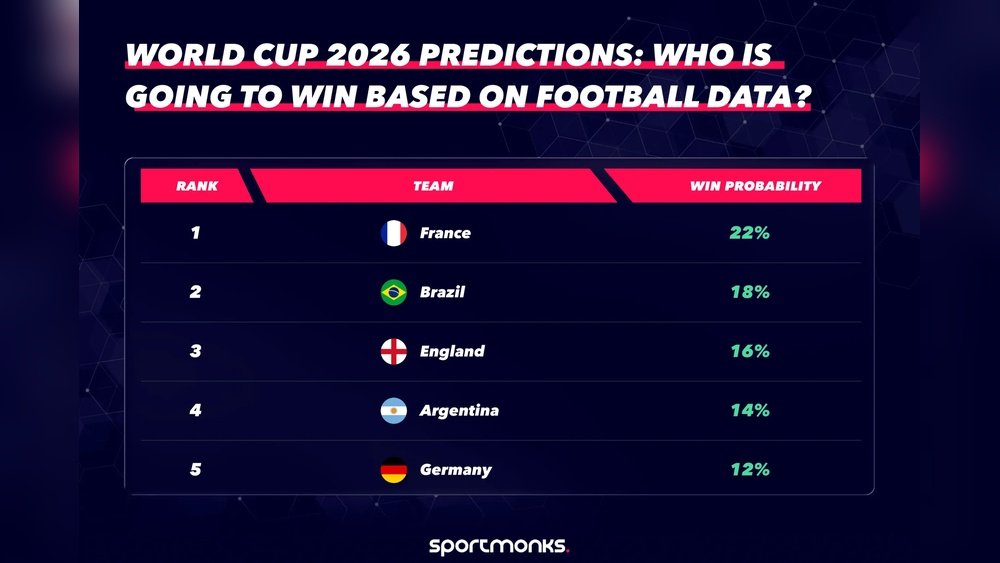
The World Cup is more than a tournament—it’s the biggest stage in soccer, watched by billions. In 2022, Argentina’s dramatic win showed how unpredictable the game can be. But data-driven predictions are changing how fans, coaches, and analysts understand the World Cup. As we look ahead to World Cup 2026, new tactics, player stats, and technology promise to make forecasting outcomes more precise. Lionel Messi once said, “You have to fight to reach your dream. You have to sacrifice and work hard for it.” For fans and analysts, that fight means using smart analysis to predict who will triumph.
Let’s dive into how numbers, trends, and expert advice can guide your World Cup 2026 predictions. Whether you’re making picks for fun, betting, or just want to sound smarter at the pub, this guide will help you use data-driven tactics to boost your soccer IQ.
1. Start With Historical Data
Looking at past World Cup results is the foundation of smart predictions. The last five tournaments have shown some clear patterns:
- European teams have won 4 out of the last 5 World Cups.
- South American teams like Brazil and Argentina remain strong contenders.
- Host nations often outperform expectations. In 2018, Russia reached the quarter-finals.
But don’t just look at winners. Study goal averages, defensive records, and upset rates. For example, the average goals per game in 2018 was 2.64, up from 2.43 in 2014. Some tournaments see more open games, while others are defined by tight defenses and narrow wins.
Digging deeper, pay attention to how teams from different continents perform in various environments. African and Asian teams often struggle in Europe but can surprise in neutral or warmer locations. In 2002, South Korea reached the semi-finals on home soil—a run few predicted.
Another useful angle is tracking how teams handle the pressure of penalty shootouts. Some nations, like Germany, have a strong record, while England famously struggled until recent years. These small details can swing knockout games.
Pro Tip:
Focus on knockout stage data. Some teams perform well in groups but collapse under pressure. Also, track which teams regularly reach quarter-finals or better. Consistency often points to strong football cultures, reliable coaching, and resilient mindsets.
2. Analyze Team Form And Player Fitness
Recent form matters more than reputation. Teams with a strong qualifying campaign, high goal differential, and few injuries are safer bets. A team’s momentum coming into the tournament often predicts how they’ll start.
- Check FIFA rankings, but also look at ELO ratings. ELO adjusts for opponent strength.
- Review injury lists and squad depth. Star players missing can change everything.
Don’t overlook teams that have made tactical changes or brought in new coaches. Sometimes, a fresh approach revives a team’s form right before the tournament. For example, Morocco’s coaching change before the 2022 World Cup sparked a historic run to the semi-finals.
Example: Germany’s shock exit in 2018 followed poor form and injuries to key players. The reigning champions had not gelled in friendlies and qualifiers, and missing pieces in midfield and defense proved costly.
Do’s And Don’ts Table
| Do | Don’t |
|---|---|
| Check recent match results | Rely only on reputation |
| Monitor injuries | Ignore squad depth |
| Consider travel fatigue | Forget climate impact |
| Look for tactical changes | Assume last World Cup form will repeat |
Another layer is how teams adapt to setbacks. In 2014, the Netherlands lost key players but switched tactics mid-tournament and still finished third. Flexibility in squad and strategy often beats big names alone.
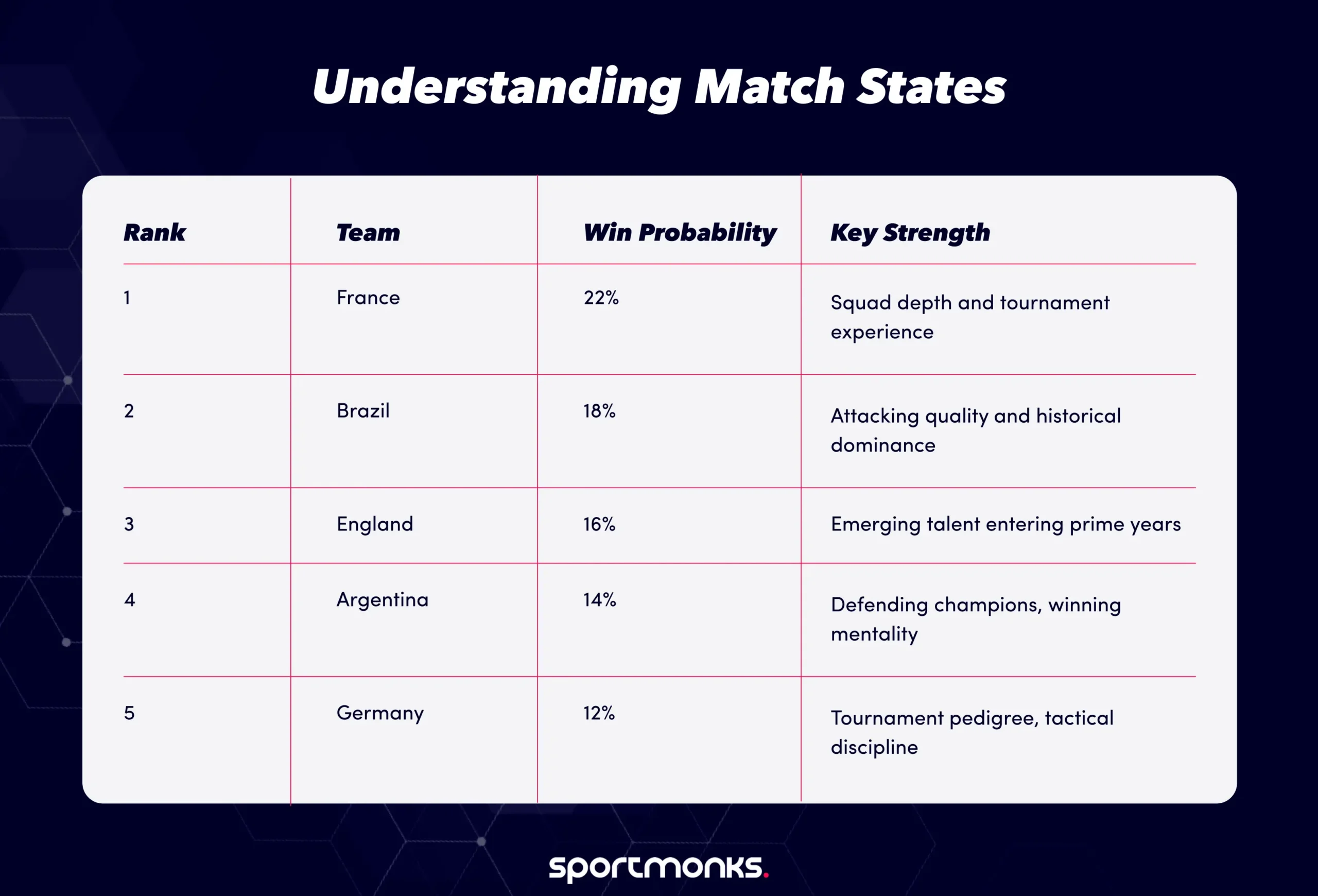
Credit: www.sportmonks.com
3. Use Advanced Metrics And Technology
Modern soccer uses expected goals (xG), possession stats, and passing networks to measure performance. These metrics help you spot teams that create chances, even if they haven’t converted them yet.
Statisticians now track player movements, pressure zones, and even how often a team wins the ball in dangerous areas. These numbers reveal strengths and weaknesses that old stats miss.
Advanced Metrics To Watch
- XG (Expected Goals): Predicts goal scoring chances. A team with high xG but low goals may be “unlucky” and ready to score more.
- Pressing Rate: Shows how aggressive teams are. High pressing can force mistakes but also tires players.
- Passing Accuracy: Reveals control and creativity. Teams with high passing accuracy often dominate possession.
- Progressive Runs: Measures how well players move the ball forward.
Example: Spain’s high passing accuracy and pressing rate in 2010 made them favorites. Despite not scoring many goals, their style suffocated opponents.
Tech tools like GPS trackers and video analysis help coaches fine-tune tactics. Fans can use free analytics sites to compare team stats and spot undervalued squads.
Non-obvious insight: Look for teams with high “expected assists” (xA) even if their forwards are missing chances. This often signals a team on the verge of a breakout performance.
4. Compare Key Players And Matchups
Certain players change games. Compare goal scorers, midfield generals, and defensive anchors. The best teams balance stars with reliable role players.
Don’t ignore experience. Veteran goalkeepers or defenders often steady young squads in high-pressure games. Leadership on the field can be as important as raw talent.
Player Comparison Table
| Player | Goals (Qualifiers) | xG/90 | Passing % |
|---|---|---|---|
| Harry Kane | 12 | 0.54 | 82% |
| Kylian Mbappé | 11 | 0.67 | 85% |
| Lionel Messi | 10 | 0.61 | 88% |
Insight: Watch for midfielders who set up goals, not just strikers. In 2018, Luka Modrić’s passing and control were key to Croatia’s surprise run to the final, despite not being a high scorer himself.
Also, consider defenders who organize the back line and goalkeepers who have performed in penalty shootouts. These “hidden stars” often make the difference when stakes are highest.

Credit: www.api-football.com
5. Factor In Group Draws And Tournament Structure
The World Cup’s group stage often sees surprises. Teams in tough groups may face early exits, while favorable draws lead to easier paths. The luck of the draw can shape the entire tournament.
- Study group compositions and past head-to-head records.
- Note travel distances—some teams play thousands of miles more.
A team’s schedule matters too. Playing back-to-back games with little rest can wear down weaker squads. Watch for “groups of death” where three or four strong teams fight for two spots.
Example: In 2014, Costa Rica advanced from a “group of death” with Italy, England, and Uruguay. Experts wrote them off, but their defensive setup and counter-attack stunned favorites.
Non-obvious insight: The new 48-team format in 2026 means more groups and possibly more upsets. Teams must adapt quickly, as even third place in a group could advance.
6. Consider Home Advantage And Climate
North America hosts in 2026 (USA, Canada, Mexico). Local climate, altitude, and fan support matter. Teams not used to these conditions may struggle.
- Mexico’s altitude can challenge European teams. The ball moves faster, and stamina drops.
- Hot summer conditions favor teams used to heat. African and South American squads sometimes adapt better than European teams.
Fan support can lift “home” teams, even if not the actual host. Expect USA, Mexico, and Canada to play in packed stadiums.
Non-obvious insight: Teams arriving early to acclimate often perform better. Extra training camps in host cities, or playing friendlies in similar weather, build an edge. In 1994, Germany and Bulgaria trained in the US weeks before the tournament and both reached the semi-finals.
Also, remember that travel within North America can be long. Teams crossing time zones between matches may struggle with fatigue, especially if they play with little rest.
7. Spot Tactical Trends And Coaching Styles
Coaches drive strategy. Some favor possession, others counter-attack. Watching how teams set up tactically can reveal which underdogs are ready to surprise.
- Study coach history. Did they win tournaments before? Do they adapt or stick to one plan?
- Look for tactical flexibility. Teams that adapt survive longer. In 2018, England’s use of set pieces was a smart response to their squad’s strengths.
Some teams press high, trying to win the ball quickly. Others defend deep and look for quick counters. The best sides can change tactics mid-game if needed.
Example: Didier Deschamps led France to a win in 2018 with a balanced, fast style. He also switched formations when needed, keeping opponents guessing.
Non-obvious insight: Teams with assistant coaches or analysts from other football cultures often bring fresh ideas. Watch for nations investing in bigger coaching staffs.
8. Use Data To Predict Upsets
Underdogs win more often than you think. Look at teams with strong defensive stats and disciplined play. Many “giant killings” start with solid defense and quick counter-attacks.
- Defensive solidity and set-piece strength can upset favorites.
- Watch for countries with rising young talent. Youth tournaments like the U-20 World Cup often reveal future stars who break out on the biggest stage.
Takeaway: Don’t ignore teams outside the top 10 in FIFA rankings. In 2022, Morocco was ranked 22nd but reached the semi-finals by focusing on tactical discipline and fast transitions.
Non-obvious insight: Nations with most players in strong European leagues tend to adapt quickly and play with confidence against big teams.
9. Compare Betting Odds And Expert Predictions
Bookmakers use huge data sets. Compare their odds with your research. Odds often shift with news—watch for last-minute injuries, weather changes, or surprise lineups.
Odds Comparison Table
| Team | Betting Odds | Expert Pick |
|---|---|---|
| Brazil | +350 | Top 4 |
| France | +400 | Finalist |
| Argentina | +500 | Champion |
Tip: Odds shift as injuries and group draws become clear. If you see odds lengthening or shortening suddenly, look for news behind the move—sometimes you can spot value before the market catches up.
It’s also smart to track “sharp money”—when professional gamblers bet heavily on a team, odds shift quickly. This often signals inside knowledge or expert analysis.
10. Actionable Takeaways For World Cup 2026 Prediction
To make smart picks, follow these steps:
- Gather historical stats—look beyond winners.
- Analyze team form and player fitness.
- Use advanced metrics—xG, passing, pressing.
- Compare key players and matchups.
- Study group draws and tournament structure.
- Consider climate and home advantage.
- Watch tactical trends and coaching styles.
- Identify upset potential—defensive stats matter.
- Check odds—compare with expert picks.
- Stay flexible—update predictions as new info comes.
Elite insight: Adjust your picks after the group stage, when real performance shows. Teams that start slow but improve often go deep, while early stars sometimes burn out.

Credit: www.sportbotai.com
Frequently Asked Questions
What Is The Best Way To Predict World Cup 2026 Matches?
Use a mix of historical data, current team form, player fitness, and advanced stats like xG. Compare expert opinions and update your picks as the tournament unfolds. Don’t rely on a single source—cross-check for the most accurate view.
How Do Injuries Affect Predictions?
Missing key players can change a team’s chances dramatically. Always check injury reports before finalizing your picks. Even a minor injury to a goalkeeper or defender can shift a match’s outcome.
Are Betting Odds Reliable For World Cup Forecasts?
Betting odds reflect real-time info and expert analysis. They’re useful but not foolproof. Combine them with your own research for better accuracy. Remember, odds also factor in public opinion, not just pure data.
What Are The Key Advanced Metrics In Soccer Prediction?
Expected goals (xG), passing accuracy, pressing rate, and defensive stats are crucial. They show team strengths beyond simple scores. Progressive carries, key passes, and “big chances created” are also valuable for deeper analysis.
Where Can I Find Reliable Soccer Data For Predictions?
Official FIFA sites, analytics platforms, and reputable sources like Wikipedia offer up-to-date stats and information. Data sites like FBref and Opta can also help you compare teams and players in detail.
World Cup 2026 promises drama and surprises. With smart data analysis, you can move beyond guesswork and make elite predictions. Remember, it’s not about picking favorites—it’s about understanding the game. Stay sharp, update your info, and enjoy the world’s greatest soccer show.